
Recognizing and Preventing Isolation: Community Support with Elizabeth Williams Episode 8
Key Takeaways
- How to evaluate home safety
- Common caregiver mistakes
- Local Asheville senior resources
- Professionals every family should consult
- Emergency planning checklist
Social isolation can quietly affect an older adult’s health, independence, and quality of life. Learn how families can recognize the signs of isolation and discover community resources in Western North Carolina that help seniors stay connected, engaged, and thriving.
Watch This Episode
Recognizing and Preventing Isolation: Community Support with Elizabeth Williams
Episode 8:
Aging well is not only about home safety, physical health, or medical care. It is also about emotional health, cognitive health, purpose, and joy. For older adults in Asheville, Hendersonville, and across Western North Carolina, social connection can be one of the most important parts of aging in place.
Isolation often happens slowly. A loved one may stop attending activities, miss appointments, call less often, or seem less interested in daily life. These changes may look like “normal aging,” but they can be signs that someone’s world is becoming smaller.
Loneliness and Social Isolation Are Not the Same
Loneliness is the feeling of being disconnected, even when other people are nearby. Social isolation is more about limited contact with others. A person can attend church, join a book club, or live with family and still feel lonely.
Social isolation may happen because of loss, health changes, hearing loss, vision changes, mobility challenges, or no longer being able to drive. It can also happen after a move, especially when an older adult leaves a longtime neighborhood, church, or friend group to live closer to adult children.
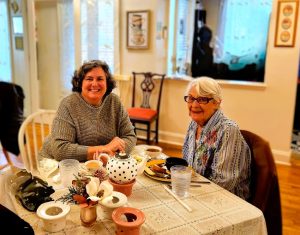
Publisher: Betsy O’Leary and her Mother
Connection Takes Ongoing Effort
Community is not something we build once and then check off a list. Like physical health, it needs regular attention. Friend groups change. People move. Spouses and friends pass away. Interests shift. Healthy aging means continuing to look for meaningful ways to stay connected.
Family caregivers can help by asking what still brings their loved one joy. Is it volunteering, attending a meal program, joining a spiritual community, walking with a group, or visiting a local thrift store where they enjoy conversation? Small, regular connections can make a big difference.
Community Meals and Adult Day Services
Community dining programs offer more than a hot meal. They create a place where older adults can sit with peers who understand their season of life. A widower may meet others who have lost a spouse. Someone who recently moved to Hendersonville or Asheville may meet others adjusting to the same kind of change.
Adult day services can also support older adults who are experiencing physical or cognitive changes. These programs provide structure, purpose, activities, and social connection while also offering support for family caregivers.

Photo Credit: Simply Life Tiny Home Community in Western NC
Volunteering Builds Purpose
Volunteering is another powerful form of connection. Nonprofits, churches, thrift stores, and community programs often depend on volunteers. For older adults, volunteering can restore a sense of purpose while helping them build new relationships.
Connection does not always have to be formal. A weekly chat with a bank teller, a friendly visit to a local shop, or a conversation with someone delivering a meal can all support emotional well-being.
What Families Should Watch For
When visiting an aging parent, try to look at the home with fresh eyes. Notice what has changed. If your loved one was always tidy and the home is now cluttered, that may be a sign they need support. If the yard was always carefully maintained and now it is not, something may be shifting.
Also consider home safety and physical strength. A parent who always changed light bulbs, trimmed trees, or handled repairs may no longer be safe doing those tasks. Aging in place is possible, but it takes senior planning, care coordination, home modifications, and honest conversations.

Sibling Conversations Matter
Siblings may see a parent differently. A loved one may “pull it together” for an out-of-town visit, while the local caregiver sees the harder days. This is common. Families should talk openly about what each person notices, what support is needed, and how each sibling can help.
One sibling may be comfortable helping with personal care. Another may be better at managing appointments, transportation, finances, or senior resources. The goal is not for everyone to do the same thing. The goal is to create a realistic plan.
No One Has to Age Alone
Isolation is usually not caused by one event. It is often the result of many small changes over time. That is why early conversations matter. Families can begin by asking what is meaningful, what feels difficult, and what kind of support would help their loved one stay connected.
Aging in place can be a wonderful choice, but it works best with planning, connection, community support, and long-term planning. No one has to do it alone.
Suggested Links
Carolina Living Choices Aging Well at Home series.
Carolina Living Choices senior resources in Western North Carolina.
Mountain Aging Partners community programs and adult day services.
WNC transportation or mobility services for older adults in Hendersonville and Asheville.